
Stress and Pain: Exploring the Causal Connection
In 1931, Dr. Albert Schweitzer was on to something when he told the world that “Pain is a more terrible lord of mankind than even death itself.” He knew then what millions of people know and experience right now, which is that pain is not only debilitating, but for many people it makes living nearly unbearable at times. While pain is something that we have all felt from time to time, there are many people around the world who suffer from it on a continuous basis, thus taking a lot of the thrill of living out of their experience.
What many of the millions of people who suffer from chronic pain don’t realize, along with those who help care for them, is that there is a substantial correlation between stress and pain. The more we understand about the causal connection that stress has with pain, the more we can begin to see effective ways to manage the chronic pain that people experience.
Chronic Pain and Stress
According to the National Institutes on Health (NIH), chronic pain is the most common reason that people in the country access the health care system. Pain, as we all have experienced, is a nervous system response that lets you know you have been injured or there is something wrong.
Chronic pain is different in that, according to the NIH, those pain signals go on for a long period of time, ranging from weeks to years. Some people know their origin of their pain, such as an accident, injury, or disease, while others have no idea where or why the pain first originated. Whether people are aware of it or not, there is a big causal connection between the chronic pain someone is feeling and the stress in their life.
Some people are aware of the stress they have in their lives. They can easily identify what it is that makes them feel stress, but millions of others have been unable to pinpoint what it is, or be honest with themselves about the origin of it. There are a variety of things that research shows is stressing people out, including their own poor health. Identifying the stress factor is a major component in being able to manage it, and thus manage the chronic stress, too.
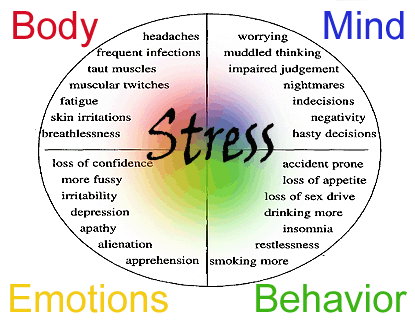
While acute stress is the most common, it is experienced in short dosages, such as right before you go to give a speech. Episodic acute stress is typical of someone who is considered a “worry wart,” or spends a lot of time worrying about everything, and often unnecessarily. Chronic stress is that which is there day after day. It’s the kind that people get used to having in their life, thus they are often no longer able to identify it. The chronic stress is debilitating, because it takes a heavy toll on one’s mind, body, and have a negative impact on those around the person who is chronically stressed, too.
Chemical Changes
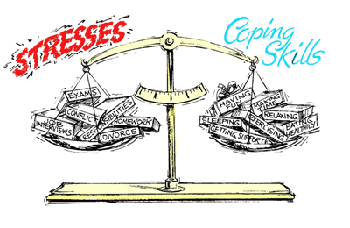
Although the information is out there to point to the fact that a lot of chronic pain is caused by the ongoing stress in one’s life, many people still find it a bit confusing how that happens. What it comes down to is that stress triggers chemical changes within the body. Those chemical changes can trigger inflammation, and increased sensitivity of the pain transmitting nerves. This takes place as an automatic, physical response-that you are not even aware is taking place. That’s why when you are feeling the headache, back pain, or other pain: You don’t realize that there is a strong likelihood that it is being brought on, or intensified, by the stress in your life.
Everyone experiences some sort of stress in their life, and a little bit of stress can be good thing, because it can excite your senses, and create an energizing ‘fight or flight’ response. This short-lived stress is not the problem that is associated with the chronic pain that millions of people experience. The APA (the American Psychological Association) reports that chronic stress can take a toll on the body, as well as make any existing symptoms you may be having even worse. They report that in a study, people found their chronic headaches were reduced when they learned how to stop thinking negative thoughts, and focused on becoming more positive.
Chronic stress, as the APA reports, can lead to a number of ailments, many that are associated with chronic pain. These include having even having a higher risk for coronary disease and depression.
Understanding the Connection
Chronic pain is not something that is likely to go away anytime soon. Yet the more we can understand about it, the better off we will be in finding ways to manage and reduce it. Whether you are someone who helps care for others who suffer from chronic pain, you suffer from it yourself, it is important to understand the causal connection between stress and the pain people are feeling. Our brains have a lot to do with how tolerant we are to pain and even if we end up causing ourselves to feel more pain with our thoughts and fears.
Once people gain an understanding about the important role stress plays in chronic pain, the more able they will be to help reduce their own pain. We are moving into a realm of pain management that involves more stress reduction and management. The benefits of stress reduction are immense. Not only has it been proven to have a beneficial impact on the chronic pain one feels, but it also helps get rid of and reduce anxiety, sleep issues, tension, concentration difficulties, and helps provide more clarity of mind.
Pain Reduction Strategy
Reducing chronic pain and managing it is within reach for millions of the people who suffer from it. Taking on stress and winning is a great way to go about no longer being a victim to it. When you tackle the stress, you will be tackling the pain.
Stress and chronic pain go hand in hand, but the good news is that it’s in your hands, and you can make a difference when you understand the connection and take action against stress.
The bottom line is that when people are ready to confront chronic pain, there are answers. Understanding chronic pain and the factors that cause it is just part of the overall picture. But when you understand the causal connection between the stress in your life and the chronic pain you are feeling, then you are ready to confront it. Only when you truly confront it will you see a reduction in the chronic pain. It is within reach, the first step is choosing to confront your chronic pain!
Are you ready to look at stress and pain form a different perspective? Ready to rewire your beliefs? I use a technique called PSYCH-K ® to do so. Interested?
To book a session email: info@lucianapierangeli.com
Look after yourself.
Article Source:
EzineArticles.com/9200741
By Steven Richeimer